I'll be brutally honest with you — I once tried to make a banana cheesecake that tasted like someone blended banana Laffy Taffy with cottage cheese and called it dessert. It was a travesty. The texture was grainy, the banana flavor was artificial and cloying, and the caramel I attempted turned into a burnt sugar brick that could've patched asphalt. I stood in my kitchen at 2 AM, eating that failure straight from the springform pan with a plastic spoon, wondering where it all went wrong.
That disaster led me down a three-month rabbit hole of testing, tweaking, and basically turning my kitchen into a cheesecake laboratory. I became the mad scientist of dairy, the Einstein of cream cheese, determined to crack the code of what makes banana cheesecake actually taste like real bananas while maintaining that cloud-like texture we all crave. Friends started avoiding my dinner invitations because they knew I'd force-feed them yet another "improved" version. My neighbors began side-eyeing the constant smell of baking crust wafting down the hallway.
But then — oh, then — I discovered the secrets that changed everything. The technique that keeps bananas from turning brown and mushy. The temperature trick that prevents those dreaded cracks across the surface. The caramel swirl method that creates ribbons of buttery gold without sinking to the bottom. This isn't just another banana cheesecake recipe; this is the result of obsession, failure, and finally, triumph. Picture yourself pulling this beauty from the oven, the surface gleaming like polished marble, the aroma of toasted nuts and vanilla bean dancing through your kitchen like they're auditioning for a cooking show.
Stay with me here — this is worth it. I'm about to show you exactly how to create a banana caramel nut cheesecake that'll make people close their eyes with the first bite, the kind of dessert that starts conversations and ends dinner parties on the highest possible note. The crust alone will make you question every graham cracker crust you've ever accepted as adequate. Let me walk you through every single step — by the end, you'll wonder how you ever made it any other way.
What Makes This Version Stand Out
Mind-Blowing Texture: We're talking about a filling so smooth and creamy, it practically melts on your tongue like ice cream left in the summer sun, yet it holds its shape with the dignity of a French pastry. The secret lies in the temperature control and the way we incorporate the bananas — no more chunky, sad banana bits that feel like they don't belong.
Real Banana Flavor: Instead of using artificial extract or dumping in mashed bananas that turn brown and weep into the filling, we caramelize them first. This concentrates their flavor into something that tastes like banana multiplied by a thousand, creating depth that'll make you realize you've never actually tasted banana before.
Caramel That Actually Works: Most recipes tell you to swirl in caramel that immediately dissolves into the filling, leaving you with sweet spots and bland spots. Our method creates distinct ribbons that stay put, giving you that perfect ratio of caramel to cheesecake in every single forkful. It's like finding treasure in every bite.
Nutty Perfection: We're not just sprinkling nuts on top like an afterthought. We're creating a candied nut layer that adds crunch, salt, and that toasty flavor that makes the whole thing sing. It's the difference between a song with and without bass — you don't miss it until you hear how much better it is with it.
Fool-Proof Crust: This isn't your grandmother's graham cracker crust that gets soggy and falls apart. We're building a crust with the texture of a gourmet cookie, one that stays crisp for days and adds its own buttery, slightly salty personality to the party. It's so good, you'll be tempted to make just the crust and eat it like cookies.
Make-Ahead Magic: Unlike most cheesecakes that taste best the first day, this one actually improves as it sits. The flavors meld and deepen, creating something even more magnificent on day three. I dare you to taste this and not go back for seconds — actually, I dare you to have any left by day three.
Crack-Free Guarantee: Through careful temperature management and a water bath technique that actually works, you'll get a surface as smooth as glass. No more covering up cracks with fruit or whipped cream — this cheesecake is proud to stand naked and flawless.
Alright, let's break down exactly what goes into this masterpiece...
Inside the Ingredient List
The Flavor Base
The cream cheese you choose makes or breaks this entire operation. Don't even think about reaching for that off-brand block that's been sitting in the dairy case since the Clinton administration. You want the full-fat, Philadelphia-style cream cheese that's been allowed to come to room temperature. Cold cream cheese creates lumps that no amount of mixing will fix — trust me, I've tried beating those stubborn blobs into submission for twenty minutes straight, and they just laughed at me. The fat content is crucial too; low-fat cream cheese contains more water, which will seep out during baking and leave you with a weepy, depressed cheesecake that tastes like diet food.
Bananas are the star here, but not just any bananas will do. You want the ones that look like they've been through a war — heavily spotted, slightly soft, emitting that intense banana perfume that fills your whole kitchen. Green bananas will taste like sadness and starch, while overripe ones that have turned completely black will make your cheesecake taste like banana bread that's been left in a humid basement. The sweet spot is when they're about 70% brown spots, which usually happens about a week after you buy them green. Pro tip: buy your bananas a week ahead of time and let them age like fine wine.
The sugar in this recipe isn't just white granulated sugar dumped in willy-nilly. We're using a combination of dark brown sugar and white sugar, which creates layers of flavor that would make an onion jealous. The brown sugar brings molasses notes that complement the caramel, while the white sugar ensures proper structure. Skip the brown sugar and you'll have a one-dimensional sweetness that tastes like banana candy rather than real fruit.
The Texture Crew
Eggs are the unsung heroes of cheesecake texture, but here's where most recipes get it completely wrong. They tell you to add eggs whole, but we're separating them for a reason. The yolks provide richness and help emulsify the batter, creating that velvety texture we're after. The whites, beaten to soft peaks and folded in at the end, lighten the batter so it's not dense like a New York cheesecake. This is the difference between a cheesecake that sits in your stomach like a brick and one that feels like eating a banana cloud.
Sour cream isn't just here for tang — it's the secret weapon against dryness. The acidity helps tenderize the proteins in the cream cheese, preventing that rubbery texture that makes you feel like you're chewing on a silicone spatula. Full-fat sour cream is non-negotiable; the low-fat stuff contains stabilizers that can break under heat, leaving you with a curdled mess that looks like cottage cheese had a bad day.
Heavy cream gets reduced down to concentrate its flavor and remove excess water. Most recipes skip this step and just dump in cream straight from the carton, which is why their cheesecakes weep like they're watching a sad movie. Reducing the cream intensifies the dairy flavor and creates a more stable filling that won't collapse into a puddle when you cut into it.
The Unexpected Star
Mascarpone cheese is my secret ingredient that takes this from good to legendary. Just a quarter cup blended into the cream cheese creates a texture so smooth, it's like the difference between silk and cotton. Mascarpone has a higher fat content and lower water content than cream cheese, which helps stabilize the filling and adds a subtle sweetness that plays beautifully with the bananas. Skip it and your cheesecake will still be good, but with it, people will ask you what kind of magic you put in there.
Cornstarch might seem like an odd addition to cheesecake, but it's your insurance policy against weeping and cracking. Just a teaspoon helps absorb excess moisture from the bananas and creates a more stable structure. Without it, you risk a cheesecake that weeps like it's been dumped, creating puddles of sugary liquid that ruin the texture of your crust.
The Final Flourish
The nuts for this recipe aren't just any nuts — we're using a combination of toasted pecans and walnuts, each bringing their own personality to the party. Pecans provide buttery sweetness, while walnuts add a slight bitterness that balances all the sugar. Toasting them is crucial; raw nuts taste like cardboard and have the texture of packing peanuts. You want them golden brown and fragrant, which takes about 8 minutes in a 350-degree oven, shaking the pan every 2 minutes so they don't burn.
Vanilla bean paste is worth every penny here. Imitation vanilla extract tastes like sadness and chemicals, while real vanilla beans add those gorgeous flecks and a complexity that makes people wonder what your secret is. The paste gives you the best of both worlds — real vanilla flavor with the convenience of a liquid. If you absolutely must substitute, use real vanilla extract, but please, for the love of all things holy, skip the imitation stuff.
Everything's prepped? Good. Let's get into the real action...
The Method — Step by Step
- Start with the crust because it needs time to cool and set up properly. Pulse your graham crackers in a food processor until they're the texture of coarse sand — not powder, not chunks, but that perfect middle ground that'll hold together without being dense. Add the brown sugar, salt, and cinnamon, pulsing just to combine. Now here's the crucial part: drizzle in the melted butter while pulsing, stopping as soon as it starts to clump together. Grab a handful and squeeze — it should hold together like wet sand at the beach, not crumble apart like a bad relationship.
- Press the crust into your springform pan with the flat bottom of a measuring cup, working from the center outward and up the sides about an inch. This isn't the time to be gentle — really pack it in there, creating an even layer that'll support all that creamy filling. The edges where the bottom meets the sides are notorious for being too thick, so pay special attention there. Pop it into a 325-degree oven for 12 minutes, just until it starts to smell like cookies and turns golden at the edges. That smell when it hits the pan? Absolute perfection.
- While the crust cools, let's tackle the bananas that'll make or break this whole operation. Slice them into coins about a quarter-inch thick — not so thin they'll dissolve, not so thick they'll sink like stones. Melt the butter in a large skillet over medium heat until it foams, then sprinkle in the brown sugar and watch the magic happen. When it starts to bubble and smell like caramel corn, add the banana slices in a single layer. This is the moment of truth — don't stir them for a full 2 minutes, letting them develop that gorgeous caramelized exterior that'll add depth to your cheesecake.
- Flip each banana slice with a fork (tongs will massacre them), cooking another 2 minutes until they're golden and fragrant. Remove them to a plate to cool completely — hot bananas will scramble your cream cheese, and nobody wants banana scrambled eggs for dessert. The caramel left in the pan? That's liquid gold. Pour it into a small bowl and save it for the swirl. Your kitchen should smell like a banana foster's dream right now, and if it doesn't, you did something wrong.
- Now for the filling, and listen closely because this is where most people mess up. Your cream cheese must be at room temperature — I mean really room temperature, not "I microwaved it for 30 seconds and now it's half-melted." Cold cream cheese creates lumps that'll haunt your cheesecake like cellulite on a supermodel. Beat it on medium speed for a full 3 minutes, scraping down the bowl every minute. It should look like thick clouds, pale and fluffy, the texture of buttercream frosting before you add the powdered sugar.
- Add the sugars gradually, beating until they're fully incorporated and the mixture looks like thick frosting. Scrape down the bowl religiously — unmixed cream cheese will create pockets of dense, tangy sadness in your finished cheesecake. Add the sour cream, mascarpone, and vanilla paste, beating just until combined. Overmixing here incorporates too much air, which rises to the top during baking and creates a weird, spongy layer that ruins the texture.
- The eggs go in last, and here's the technique that separates amateur hour from legends. Beat them in a separate bowl with the cornstarch until they're homogenous, then add them to the cream cheese mixture. Beat just until you can't see any more yellow streaks — about 30 seconds. This prevents overmixing and ensures the eggs are evenly distributed. Fold in the cooled caramelized bananas with a spatula, being gentle so they don't break down into mush. The batter should be thick and luxurious, like the world's most expensive pudding.
- Time for the water bath, and no, you can't skip this step unless you enjoy cheesecakes with the texture of rubber. Wrap the outside of your springform pan with three layers of heavy-duty foil, making sure it comes up at least 2 inches up the sides. Place it in a roasting pan and pour the batter over the crust, smoothing the top with an offset spatula. Pour hot water into the roasting pan until it comes halfway up the sides of the springform pan. Don't walk away from the oven here — the water should be steaming but not boiling, creating a humid environment that prevents cracks and ensures even baking.
- Bake at 325 degrees for 55-65 minutes, until the edges are set but the center still jiggles like Jell-O when you gently shake the pan. The top should be pale golden with a few light brown spots — if it's browning too quickly, tent it with foil. Turn off the oven and crack the door open with a wooden spoon, letting the cheesecake cool gradually for an hour. This prevents the dramatic temperature change that causes cracks and creates that perfect, creamy texture that makes people moan out loud.
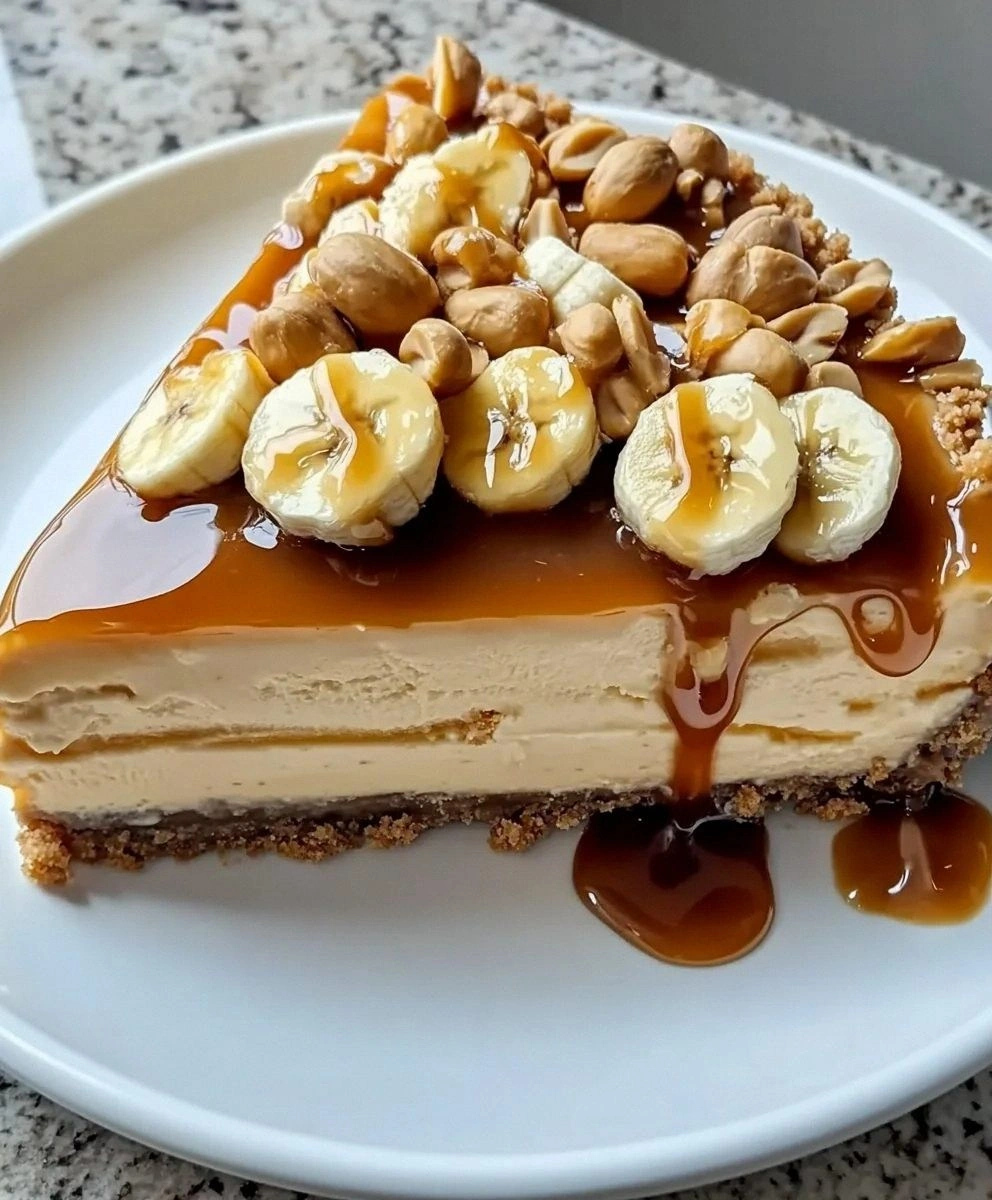
- While the cheesecake cools, make the caramel swirl by heating the reserved banana caramel with the heavy cream until it reaches a pourable consistency. It should coat the back of a spoon like velvet, thick enough to create ribbons but thin enough to swirl. Drizzle this over the cooled cheesecake in a random pattern, then use a toothpick to create marbled designs that would make a barista jealous. The contrast between the pale cheesecake and the amber caramel should look like edible art.
- The candied nuts are the final flourish, and they're what elevates this from great to legendary. Heat the sugar in a heavy-bottomed pan over medium heat, watching carefully as it melts and turns golden. When it reaches a deep amber color (about 350 degrees if you're using a thermometer), quickly stir in the nuts and a pinch of salt. Pour onto a silicone mat and let cool completely, then break into rustic pieces. These aren't just for decoration — they add crunch, salt, and that toasty depth that makes the whole thing taste like a sophisticated candy bar.
That's it — you did it. But hold on, I've got a few more tricks that'll take this to another level...
Insider Tricks for Flawless Results
The Temperature Rule Nobody Follows
Here's the thing that separates the pros from the pretenders: temperature control doesn't stop when the cheesecake comes out of the oven. Most people slice into their cheesecake while it's still warm, creating a gooey mess that collapses like a failed soufflé. Your cheesecake needs to chill for at least 4 hours, but overnight is where the magic really happens. The filling sets up properly, the flavors meld and deepen, and suddenly you've got something that tastes like it came from a Parisian patisserie rather than your home kitchen. I know it's torture waiting, but good things come to those who don't sabotage their own success.
The serving temperature matters just as much. Pull it from the fridge 30 minutes before serving — long enough to take the chill off but not so long that it starts to weep. A properly tempered cheesecake should feel cool and firm, not cold and hard. The flavors bloom at this temperature, and the texture becomes silky rather than dense. A friend tried serving this straight from the fridge once — let's just say it was like eating flavored cream cheese, and not in a good way.
Why Your Nose Knows Best
Don't rely on timers alone — your nose is the most sophisticated piece of equipment in your kitchen. When the cheesecake is perfectly baked, your kitchen will smell like vanilla custard with hints of toasted nuts and caramel. If it starts to smell eggy or sulfurous, you've overbaked it and created a texture closer to scrambled eggs than silk. That first whiff of banana perfume mingling with vanilla should hit you about 45 minutes into baking, growing more complex as the sugars caramelize. When you smell the nuts toasting, start checking for doneness — they're your canary in the coal mine.
The visual cues are equally important. A perfectly baked cheesecake will have puffed slightly around the edges, with the center still jiggling like a gentle wave when you shake the pan. It shouldn't slosh like liquid, but it shouldn't be set like a brick either. Think of it like selecting a perfect avocado — it should yield to gentle pressure but still have structure. Overbaked cheesecake develops a dry, cracked surface and tastes like sweet cardboard, while underbaked stays liquid in the center and never sets up properly.
The 5-Minute Rest That Changes Everything
After you turn off the oven, resist the urge to yank that cheesecake out like you're performing an emergency surgery. The gradual cooling process is what prevents cracks and creates that perfectly smooth texture we're after. Crack the oven door and walk away for an hour — go watch an episode of your favorite show, fold laundry, literally anything but hover over the cheesecake. This slow cooling prevents the dramatic temperature shock that causes the surface to contract too quickly, creating those fault lines that ruin the presentation.
But here's the part most recipes miss: after the oven cooling, you need to run a thin knife around the edge while it's still warm. As the cheesecake cools, it contracts slightly, and if it's stuck to the sides of the pan, it'll crack as it pulls away. Release it now, while it's still flexible, and it'll contract evenly as it cools. Skip this step and you'll have a cratered surface that looks like the moon, no matter how perfect your water bath technique was.
Creative Twists and Variations
This recipe is a playground. Here are some of my favorite ways to switch things up:
The Chocolate Lover's Dream
Replace half the graham crackers in the crust with chocolate wafer cookies, and add 2 tablespoons of Dutch-processed cocoa powder to the filling. The chocolate adds depth that makes the banana taste even more intense, like banana bread got a sophisticated makeover. Swirl in chocolate ganache instead of caramel for a black-and-white effect that looks stunning. Dark chocolate especially complements the banana, creating a sophisticated flavor profile that tastes like it came from a high-end chocolate shop rather than your kitchen.
The Tropical Escape
Add 1/2 cup of toasted coconut to the crust, and replace the nuts with macadamia nuts for a Hawaiian twist. A tablespoon of dark rum in the filling transports you straight to the islands, while a passion fruit curd swirl adds bright acidity that cuts through all the richness. Top with fresh mango slices and mint for a dessert that tastes like vacation on a plate. This version is especially popular at summer gatherings, where people want something that tastes like sunshine and ocean breezes.
The Peanut Butter Cup Remix
Swirl in 1/2 cup of creamy peanut butter with the caramel for a flavor that tastes like the world's most sophisticated peanut butter and banana sandwich. Use honey-roasted peanuts instead of regular nuts for extra sweetness and crunch. The combination hits that nostalgic note while remaining elegant enough for a dinner party. Kids go crazy for this version, but don't underestimate how much adults love revisiting those childhood flavors in a grown-up format.
The Spice Market Adventure
Add 1 teaspoon of cardamom and 1/2 teaspoon of nutmeg to the filling for a warm, exotic twist that makes the banana taste almost tropical. Replace the regular sugar in the crust with coconut sugar for deeper, more complex sweetness. The spices complement the banana beautifully, creating a flavor that tastes like it came from a Middle Eastern bakery. This version is especially stunning in fall, when people are craving those warming spices but want something beyond pumpkin.
The Berry Banana Fusion
Swirl in a raspberry puree along with the caramel for a magenta ribbon that tastes like banana berry pie. The tartness of the raspberries balances the sweetness of the banana and caramel, creating a more sophisticated flavor profile. Use pistachios instead of pecans for a color contrast that makes the whole thing look like edible art. This version is particularly popular with people who claim they "don't like banana desserts" — the raspberry adds enough complexity to change their minds.
The Salted Caramel Upgrade
Add an extra teaspoon of flaky sea salt to the caramel and sprinkle Maldon salt over the top just before serving. The salt makes the banana taste more like banana and the caramel more like caramel, creating a flavor that's somehow both more intense and more balanced. Use smoked salt for an extra layer of complexity that makes people ask "what is that amazing flavor?" This is the version I make for foodies who think they've tasted everything — it always surprises them.
Storing and Bringing It Back to Life
Fridge Storage
This cheesecake will keep beautifully in the refrigerator for up to 5 days, but you need to store it properly or it'll absorb every weird smell in your fridge. Cover it loosely with plastic wrap, making sure the wrap doesn't touch the surface — condensation will create wet spots that ruin the texture. Better yet, store it in a cake carrier or under a large inverted bowl. The flavors actually improve after day two, when the banana and caramel have time to meld into something transcendent. I dare you to taste this on day three and tell me it's not better than day one — the transformation is magical.
Freezer Friendly
You can freeze this cheesecake for up to 2 months, but do it right or you'll end up with a icy mess. Cut it into individual slices first, wrapping each piece tightly in plastic wrap, then foil. This way you can thaw just what you need instead of the whole thing. Thaw overnight in the refrigerator, never at room temperature, which creates condensation that makes the crust soggy. The texture will be slightly denser after freezing, but the flavor remains incredible. Pro tip: freeze the caramel and nuts separately, adding them fresh after thawing for maximum impact.
Best Reheating Method
While this cheesecake is meant to be served cold, sometimes you want to refresh it slightly. Remove it from the refrigerator 30 minutes before serving, and if the caramel has hardened, warm it slightly with a kitchen torch or under a broiler for 30 seconds. A tiny splash of cream whisked into the caramel will bring it back to that perfect drizzling consistency. If the nuts have lost their crunch, toast them briefly in a dry pan for 2-3 minutes. These small touches make a leftover slice taste freshly made.