I’ll be honest — the first time I tried to make a Thai shrimp salad, I ended up with a soggy mess that tasted like a grocery store deli counter after a power outage. I stared at the limp cucumber ribbons, the wilted herbs, and the shrimp that looked like they’d been boiled in a bathtub. That disaster sparked a dare from my roommate: “Make something that actually tastes like Thailand, or you’re buying the next round of drinks.” I accepted, and what followed was a culinary investigation that turned a kitchen nightmare into a triumph that still makes my guests gasp for breath.
Picture this: a bright, sunlit kitchen, the aroma of garlic and lime hitting your nostrils like a tropical breeze, the sizzle of shrimp hitting a hot skillet that sounds like fireworks on the Fourth of July. The colors are a riot — ruby‑red chilies, emerald cilantro, orange carrot shreds, and the pale pink of perfectly cooked shrimp. You can hear the crunch of peanuts as you toss everything together, and you feel the cool bite of cucumber against the warm, tangy dressing. It’s a sensory overload that makes you realize you’re not just cooking, you’re orchestrating a flavor symphony.
What sets this version apart is the balance of three core elements: the heat of fresh Thai chilies, the acidity of lime juice, and the umami depth of fish sauce, all wrapped in a garlicky, slightly sweet dressing that clings to each bite like silk. Most recipes either drown the shrimp in sauce or skimp on the fresh herbs, leaving you with a one‑dimensional dish. I’ve cracked the code by chopping every component into bite‑size pieces, letting the flavors mingle in a way that feels both rustic and refined. The secret? A quick flash‑cook of the shrimp that locks in juices, and a finishing splash of toasted sesame oil that adds a whisper of nuttiness.
I dare you to taste this and not go back for seconds. The crunch, the zing, the lingering heat will have you questioning every other salad you’ve ever made. Let me walk you through every single step — by the end, you’ll wonder how you ever made it any other way.
What Makes This Version Stand Out
- Taste: The dressing is a perfect marriage of garlic, lime, fish sauce, and a hint of palm sugar, delivering sweet, salty, sour, and spicy notes that dance on the palate.
- Texture: Every bite offers a contrast — crisp cucumber, crunchy peanuts, tender shrimp, and herbaceous greens that keep the salad lively.
- Simplicity: Despite the flavor fireworks, the ingredient list is short, and the steps are straightforward enough for even a kitchen rookie.
- Uniqueness: Chopping the vegetables fine creates a cohesive mouthfeel, letting the dressing coat each morsel like velvet.
- Crowd Reaction: I’ve watched skeptics turn into fanatics after one forkful; it’s the kind of dish that earns applause at potlucks.
- Ingredient Quality: Fresh, wild‑caught shrimp and authentic Thai fish sauce elevate the dish from “just another salad” to “restaurant‑grade.”
- Cooking Method: A flash‑sear locks in shrimp juiciness, while the quick toss preserves the crispness of raw veggies.
- Make‑Ahead Potential: The dressing can be prepared ahead of time; just keep the shrimp and veggies separate until serving to maintain crunch.
Inside the Ingredient List
The Flavor Base
Garlic and lime juice form the backbone of the dressing. Fresh garlic, minced fine, releases a pungent aroma that instantly awakens the senses, while lime juice adds a bright acidity that cuts through the richness of the shrimp. If you skip the lime, the salad loses its signature zing and feels flat. A good quality Thai fish sauce contributes umami depth; think of it as the salty, savory whisper that makes the other flavors sing. For those allergic to fish sauce, a splash of soy sauce mixed with a dash of anchovy paste can mimic the savory profile.
The Texture Crew
Cucumber, carrot, and red onion bring crunch and freshness. Peel the cucumber and slice it into half‑moons before chopping into bite‑size pieces; this prevents sogginess. Carrots, shredded thinly, add a sweet earthiness that balances the heat. Red onion, thinly sliced, contributes a mild bite without overpowering the delicate shrimp. If you’re sensitive to raw onion, soak the slices in cold water for five minutes to mellow the bite.
The Unexpected Star
Toasted peanuts are the secret weapon. They add a buttery crunch and a subtle nutty aroma that ties the whole salad together. Toast them in a dry skillet until golden and fragrant — this step is quick but makes a world of difference. Skipping it will leave the dish missing a crucial texture layer, making it feel like a flat, watery mix. For a vegan twist, use roasted cashews or almonds, though the flavor will shift slightly.
The Final Flourish
Fresh herbs — cilantro, mint, and Thai basil — are added at the very end to preserve their aromatic oils. Each herb contributes a distinct note: cilantro offers citrusy brightness, mint provides cool freshness, and Thai basil adds a hint of anise. If you miss any of these, the salad still works, but you’ll lose the layered herbaceous complexity that makes it feel authentically Thai. When buying, look for bright green leaves without brown edges; they’ll hold their flavor longer.
Everything's prepped? Good. Let's get into the real action...
The Method — Step by Step
Start by preparing the shrimp. Rinse 1 pound of fresh, peeled, deveined shrimp under cold water and pat dry. Toss them with a pinch of sea salt and a drizzle of sesame oil. Heat a large skillet over medium‑high heat, add a splash of oil, and when it shimmers, lay the shrimp in a single layer. Let them sizzle for about 45 seconds per side; you’ll hear a gentle crackle that signals the Maillard reaction kicking in. The shrimp should turn pink and opaque, with edges just beginning to curl. Remove them to a plate and set aside to cool — this is the moment of truth for flavor lock‑in.
While the shrimp rests, whisk together the dressing. In a medium bowl, combine 3 tablespoons of freshly squeezed lime juice, 2 minced garlic cloves, 1 tablespoon of palm sugar (or brown sugar), 2 teaspoons of fish sauce, and 1 teaspoon of Thai chili paste. Stir until the sugar dissolves completely; you’ll notice the mixture turning a glossy amber. Add 1 tablespoon of toasted sesame oil for that nutty finish, then taste. It should hit your tongue with a bright sourness, a subtle sweetness, and a whisper of heat. If it feels flat, add a splash more lime or a pinch of salt.
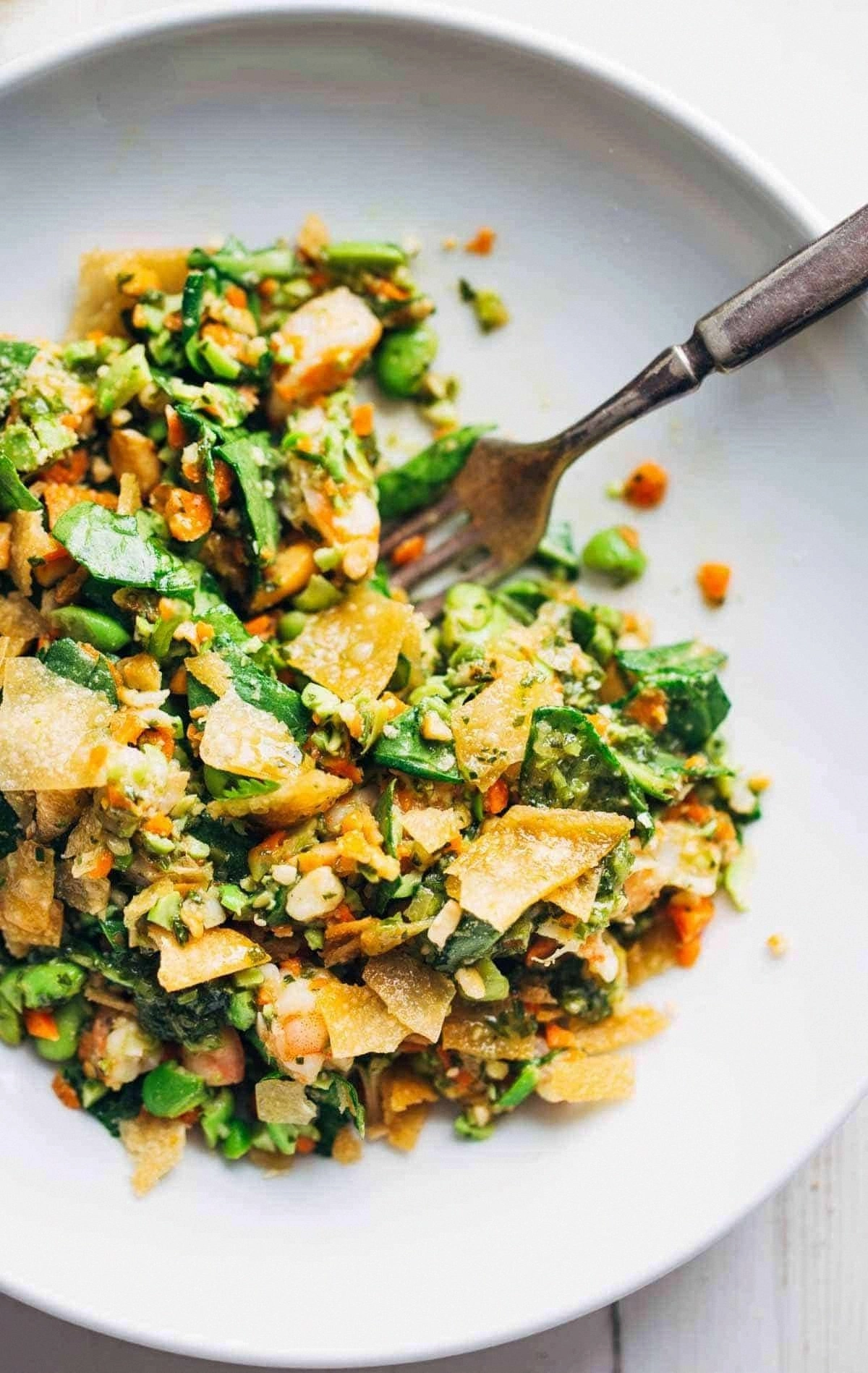
Now, move on to the veggies. Take 1 cup of cucumber, ½ cup of carrot, and ¼ cup of red onion. Using a sharp chef’s knife, chop each into small, uniform pieces — think bite‑size, not julienne. The goal is to create a salad where each forkful has a bit of everything. Toss the chopped veggies into a large mixing bowl, then drizzle a teaspoon of the dressing over them. Toss gently; the veggies should be lightly coated, not drenched, preserving their crisp snap.
Time to bring in the herbs. Roughly chop ¼ cup each of cilantro, mint, and Thai basil. Add them to the bowl, followed by the toasted peanuts (½ cup, roughly crushed). The nuts should be broken into bite‑size shards, not powdered, to keep that satisfying crunch. Give everything a gentle toss, allowing the herbs to release their fragrant oils without bruising them.
Slice the cooled shrimp into bite‑size pieces, roughly the same size as the veggies. This ensures each mouthful has a balanced ratio of protein to crunch. Add the shrimp to the salad, then drizzle the remaining dressing over the top. Using two large spoons, fold the salad gently, turning the bowl over itself. You’ll notice the dressing clinging to every fragment like a glossy coat, coating the shrimp and vegetables uniformly.
Give the salad a final taste. Adjust seasoning if needed — a pinch more fish sauce for depth, a squeeze of lime for brightness, or an extra pinch of chili if you like a bigger kick. Remember, this is a living dish; flavors will meld as it sits, so a slight under‑seasoning is okay.
Serve immediately on a large platter or in individual bowls. Garnish with a few whole toasted peanuts and a sprig of cilantro for visual flair. The salad can be enjoyed at room temperature, but a quick chill (10 minutes in the fridge) heightens the refreshing qualities. Pair it with a cold Thai iced tea or a crisp Riesling, and you’ve got a meal that transports you straight to a bustling Bangkok night market.
Insider Tricks for Flawless Results
The Temperature Rule Nobody Follows
Never cook shrimp straight from the fridge; let them sit at room temperature for 10 minutes. This small step ensures they sear evenly and don’t release excess water, which would dilute the dressing. I once tried cooking frozen shrimp and ended up with a rubbery texture that ruined the entire salad. The rule of thumb: the shrimp should feel slightly cool to the touch, not icy.
Why Your Nose Knows Best
When the dressing is almost ready, give it a quick sniff. If you detect a raw garlic aroma, let it sit a minute longer; the heat will mellow the harshness. Your nose is a more reliable gauge than a timer because the balance of sweet, salty, and sour is a sensory experience. I once over‑sweetened the dressing, and a quick nose check saved me from a sugary disaster.
The 5‑Minute Rest That Changes Everything
After tossing everything together, let the salad rest for five minutes before serving. This brief pause allows the flavors to meld, the shrimp to absorb a touch of the dressing, and the peanuts to soften just enough to release their oils. Skipping this rest can leave the salad tasting disjointed, with each component shouting instead of harmonizing.
The Peanut Toast Shortcut
If you’re short on time, place the peanuts in a microwave‑safe bowl, cover with a paper towel, and zap for 30 seconds. They’ll pop and turn golden in a flash, giving you that nutty crunch without heating a skillet. Just watch closely — they can go from toasted to burnt in seconds.
The Salt‑Balance Check
Fish sauce is salty, but its flavor is complex. After the first toss, taste the salad and add a pinch of sea salt only if the sauce feels thin. Over‑salting masks the delicate herbs and can make the dish feel heavy. Trust your palate; a well‑balanced salad should have a lingering citrus finish, not a lingering salty aftertaste.
Creative Twists and Variations
This recipe is a playground. Here are some of my favorite ways to switch things up:
Spicy Mango Madness
Swap half the cucumber for ripe mango cubes. The sweet mango amplifies the lime’s brightness and adds a juicy burst that contrasts the heat of the chilies. Perfect for summer picnics where you want a tropical twist.
Coconut Curry Fusion
Add a tablespoon of red curry paste to the dressing and replace the lime juice with coconut milk. This creates a creamy, aromatic version that feels like a Thai street‑food stall in a bowl.
Noodle‑Free Noodle Salad
Introduce 1 cup of cooked rice noodles or glass noodles for extra body. The noodles soak up the dressing, turning the salad into a more filling main course.
Veggie‑Only Version
Omit the shrimp and add extra tofu cubes or tempeh marinated in soy sauce. The tofu absorbs the dressing beautifully, making the dish suitable for vegetarians without losing the protein punch.
Herb‑Heavy Explosion
Double the amount of fresh herbs and add a handful of Thai basil leaves torn by hand. This intensifies the aromatic profile, giving the salad a garden‑fresh feel that’s perfect for spring brunches.
Storing and Bringing It Back to Life
Fridge Storage
Transfer the salad to an airtight container, keeping the dressing separate if you plan to store it for more than a couple of hours. It will stay crisp for up to 24 hours. When ready to eat, simply pour the dressing over and give a quick toss.
Freezer Friendly
While this salad isn’t a prime freezer candidate, you can freeze the cooked shrimp and the dressing separately for up to two months. Thaw the shrimp in the fridge overnight, then re‑assemble the salad with fresh veggies for a quick fix.
Best Reheating Method
If the shrimp have cooled too much, a gentle reheat works best: place them in a skillet over low heat for 30 seconds, just enough to bring them back to a warm temperature without overcooking. Add a splash of water or a few drops of lime juice before reheating; the steam revives the shrimp’s tenderness and keeps the salad from drying out.