I was standing in a cramped kitchen, the smell of burnt toast still clinging to the air, when a friend texted me a meme about “the ultimate breakfast hack.” My stomach rumbled in protest, and I realized I needed a meal that could survive a hectic schedule without sacrificing flavor. That moment sparked a quest that culminated in this version of savory Spam musubi with egg—a dish that feels like a high‑energy hug in a bite‑size package.
Picture the scene: steam curling from a pot of perfectly seasoned rice, the sizzle of Spam hitting a hot skillet, and the golden yolk of an egg cracking onto a hot surface. The sound is a comforting clack that signals breakfast is about to arrive. The aroma—sweet, umami, and slightly smoky—fills the room, while the texture of the rice clings together like a velvety base. The anticipation builds as the first sheet of nori is laid down, ready to cradle the savory layers.
What makes this version stand out is a deliberate balance between classic Japanese technique and bold, modern flavor twists. I’ve tweaked the rice seasoning to give it a subtle tang that cuts through the richness of Spam, and I’ve incorporated a lightly folded egg that adds a silky interior. The result is a musubi that is both familiar and daring, a true crowd‑pleaser for any table. I dare you to taste this and not go back for seconds.
There’s a single ingredient that turns this dish into a flavor powerhouse: soy sauce. I’ve marinated the Spam in soy sauce before grilling, so every bite is infused with depth. The combination of the sweet, tangy rice, the smoky Spam, and the creamy egg creates a symphony of textures and tastes that will make you wonder how you ever made it any other way. Let me walk you through every single step—by the end, you’ll wonder how you ever made it any other way.
What Makes This Version Stand Out
- Flavor: The rice is seasoned with a precise ratio of vinegar, sugar, and salt, creating a sweet‑tang balance that complements the salty Spam. This subtle acidity lifts the dish without overpowering the natural umami of the protein.
- Texture: The Spam is sliced thin, pan‑seared until the edges caramelize, and then brushed with a glaze that gives it a glossy, almost lacquered finish. The result is a crisp exterior that shatters like thin ice when you bite.
- Egg Integration: A lightly folded, runny egg is tucked inside the rice layer, creating a molten center that oozes out with every bite. The contrast between the warm, gooey yolk and the firm rice is pure bliss.
- Visual Appeal: The vibrant green of the nori, the golden sheen of the Spam, and the creamy yolk create a color palette that is as eye‑catching as it is appetizing.
- Convenience: This recipe is a one‑pan, one‑pot wonder that can be prepped in under 15 minutes and cooked in 30 minutes. It’s ideal for busy mornings or as a portable lunch.
- Make‑Ahead Friendly: The musubi can be assembled in advance and wrapped tightly in cling film, making it a perfect grab‑and‑go snack for commuters.
- Ingredient Quality: Using a high‑quality Spam and fresh eggs ensures that every bite is packed with authentic flavor and texture.
Inside the Ingredient List
The Flavor Base
The rice is the foundation of this dish. 2 cups of sushi rice are rinsed until the water runs clear, then cooked with exactly 2 cups of water to achieve that signature sticky yet separate grain texture. The rice vinegar, sugar, and salt are whisked together until the sugar dissolves, creating a sweet‑tang glaze that coats each grain like velvet. If you skip the vinegar, the rice will taste flat and the Spam will drown in blandness.
Tip: For an extra burst of flavor, add a splash of mirin to the seasoning mixture; it sweetens the rice subtly and adds depth. If you’re allergic to soy, substitute with a gluten‑free tamari, but keep the same volume to maintain the right balance.
The Texture Crew
The Spam is the star of the show. Slice it into 1/4‑inch thick pieces, then pat dry with a paper towel to remove excess moisture. This step is crucial; a wet Spam will steam instead of searing, resulting in a soggy texture. Pan‑sear the slices over medium‑high heat until the edges are crisp and caramelized, then brush them with soy sauce for an extra layer of umami.
If you prefer a vegetarian version, substitute Spam with thick slices of marinated tofu or tempeh. The key is to get a good sear, so use a non‑stick skillet and a small amount of oil.
The Unexpected Star
Eggs add a luscious, silky interior that contrasts beautifully with the firm rice and crisp Spam. Beat the eggs lightly with a pinch of salt, then scramble them in a non‑stick pan until they’re just set but still soft. Fold them gently, ensuring the yolk remains runny; this will create a molten center when the musubi is cut open.
Swapping in a soft‑boiled egg gives a different mouthfeel, but the runny yolk is what makes this recipe special. If you’re looking to reduce cholesterol, use egg whites only, though the texture will change.
The Final Flourish
Roasted seaweed nori sheets are the packaging that holds everything together. They’re cut into 4‑inch squares that snugly fit the rice and Spam layers. The nori adds a subtle umami flavor and a satisfying crunch when you bite into it. If you don’t have nori, consider using thinly sliced cucumber or a lettuce leaf as a low‑carb alternative.
Everything's prepped? Good. Let's get into the real action…
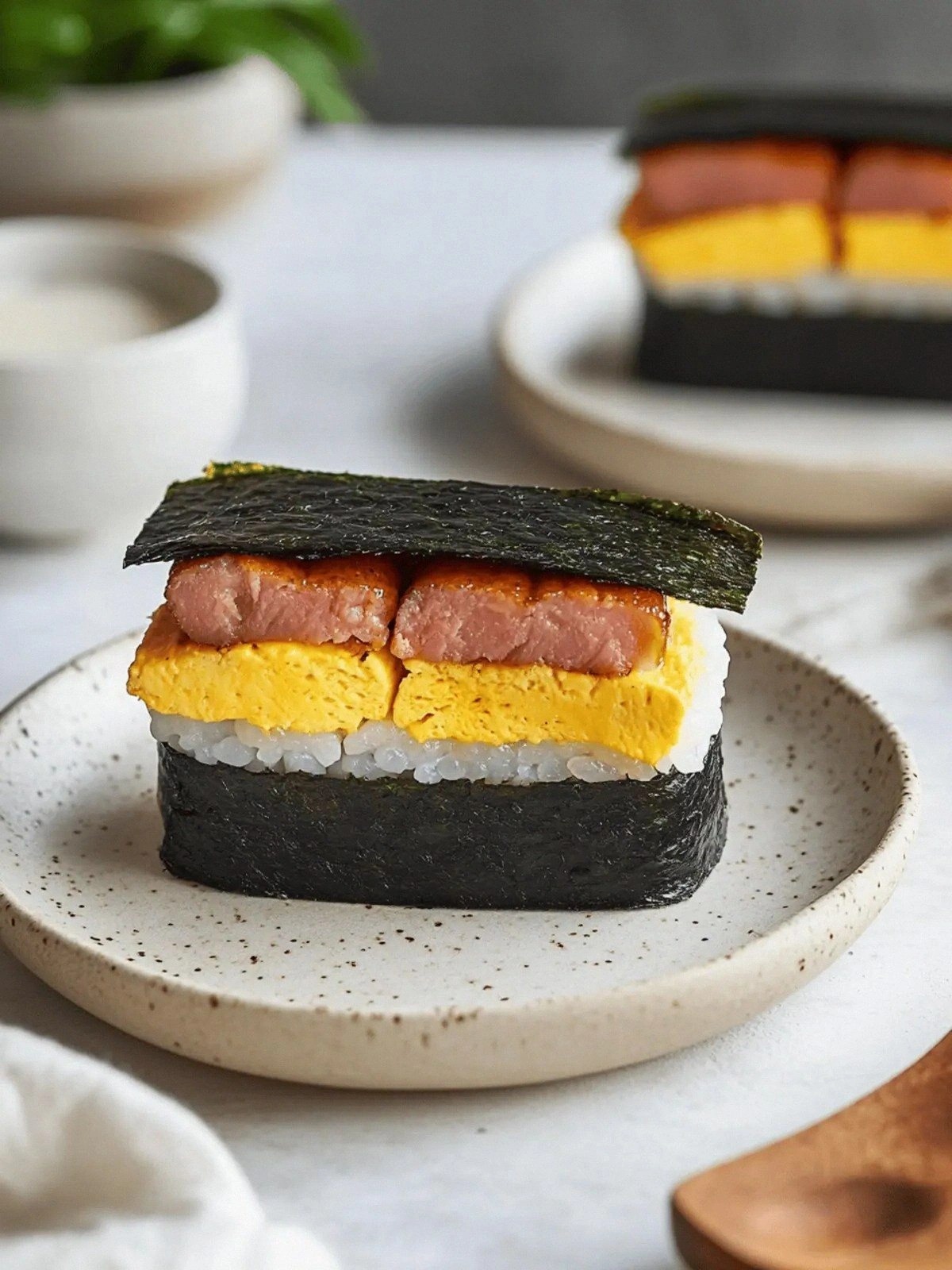
The Method — Step by Step
- Begin by cooking the sushi rice according to package instructions, using 2 cups of water. While the rice is steaming, rinse it under cold water until the water runs clear, then drain thoroughly. This step ensures the grains stay separate and fluffy. Set the rice aside to cool slightly before seasoning.
- In a small bowl, whisk together 1/4 cup rice vinegar, 2 tbsp sugar, and 1 tsp salt until the sugar dissolves completely. Pour the mixture over the warm rice and fold gently, making sure each grain is coated. Let the rice cool to room temperature; this helps the flavors meld.
- Heat a non‑stick skillet over medium‑high heat and add a splash of oil. Place the Spam slices in the pan and sear each side for 2–3 minutes until golden brown and caramelized. Brush each slice with 1 tbsp soy sauce during the last minute of cooking to enhance the glaze. Remove from heat and let cool.
- While the Spam is cooling, scramble the eggs in a lightly oiled pan until they’re just set but still soft. Fold the eggs gently to keep the yolk intact. This technique ensures a silky, runny center that will melt into the rice when assembled.
- Place a sheet of nori on a clean surface. Spread a thin layer of seasoned rice over the nori, leaving a 1‑inch border at the top. The rice should be snug but not too tight; this allows the Spam and egg to be folded without tearing the nori.
- Lay a slice of Spam on top of the rice, then add a spoonful of scrambled eggs. Fold the edges of the nori over the filling, pressing gently to seal. Use a damp cloth to wipe any excess moisture from the nori edges to ensure a tight seal.
- Repeat the process for the remaining nori sheets. Once all musubi are assembled, cut each roll into 1‑inch squares with a sharp knife. Slice diagonally for a more elegant presentation.
- Serve immediately or wrap tightly in cling film for a portable snack. If you’re storing them, keep them refrigerated and consume within 24 hours for optimal freshness.
That’s it — you did it. But hold on, I’ve got a few more tricks that will take this to another level…
Insider Tricks for Flawless Results
The Temperature Rule Nobody Follows
Maintaining the right skillet temperature is key to achieving that caramelized crust on the Spam. If the heat is too low, the Spam will steam; if it’s too high, the exterior will burn before the interior cooks. Use a thermometer to keep the skillet at 375°F, or test with a drop of water that sizzles and evaporates instantly.
Why Your Nose Knows Best
Smell is a powerful indicator of doneness. As the Spam cooks, a sweet, savory aroma will fill the kitchen; when it’s ready, the scent will be intense but not burnt. Trust your nose over the clock, especially if you’re new to searing meats.
The 5‑Minute Rest That Changes Everything
After searing the Spam, let it rest on a wire rack for 5 minutes. This rest period allows the juices to redistribute, resulting in a more tender texture. Skipping this step often leads to a dry, rubbery bite.
The Perfect Rice Ratio
If you prefer a slightly firmer bite, reduce the water by 1/4 cup. For a softer, stickier rice, add an extra 1/4 cup of water. Adjusting the water ratio changes the overall mouthfeel and can cater to personal preference.
The Nori Wrapping Technique
Wring a small amount of water over the nori edge before sealing to prevent it from cracking. Then press lightly with a damp cloth to create a seal that holds the filling together. This simple step ensures each bite stays intact.
The Egg‑Scramble Secret
Add a splash of milk or cream to the eggs before scrambling for extra richness. The dairy adds a silky texture and a subtle flavor that complements the umami of the Spam. It’s a small tweak that makes a big difference.
Creative Twists and Variations
This recipe is a playground. Here are some of my favorite ways to switch things up:
Spicy Sriracha Spam Musubi
Swap the soy sauce for a mixture of soy sauce and sriracha before searing the Spam. The heat will cut through the richness, creating a fiery contrast that excites the palate.
Miso‑Glazed Spam Musubi
Brush the Spam with a thin layer of miso paste mixed with mirin before pan‑searing. The miso adds depth and a slightly sweet, earthy flavor that pairs beautifully with the rice.
Avocado & Sesame Musubi
Top the rice with sliced avocado and sprinkle toasted sesame seeds before adding the Spam. The creamy avocado provides a fresh, cool counterpoint to the savory Spam.
Vegetarian Tempeh Musubi
Marinate thick slices of tempeh in soy sauce, maple syrup, and garlic, then pan‑sear until crispy. Use the same assembly method for a plant‑based version that still delivers the same umami punch.
Crispy Panko Spam Musubi
Dip the Spam slices in beaten egg, then coat with panko breadcrumbs before frying. The crunchy exterior adds a delightful texture contrast to the soft rice and egg.
Cheesy Egg Drop Musubi
Add shredded cheddar or mozzarella to the scrambled eggs before folding them into the rice. The cheese melts into a gooey layer that elevates the dish to comfort‑food status.
Storing and Bringing It Back to Life
Fridge Storage
Wrap each musubi tightly in cling film and store in an airtight container. Consume within 24 hours for maximum freshness. The rice may soften slightly, but the flavor remains intact.
Freezer Friendly
Place musubi in a freezer‑safe bag, removing excess air. Freeze for up to 3 days. Thaw overnight in the refrigerator before reheating. This method preserves texture and prevents the rice from becoming mushy.
Best Reheating Method
Reheat in a skillet over medium heat for 2–3 minutes per side, or in a microwave with a damp paper towel for 30 seconds. Add a tiny splash of water before reheating to steam the rice back to perfection, ensuring the egg remains moist.